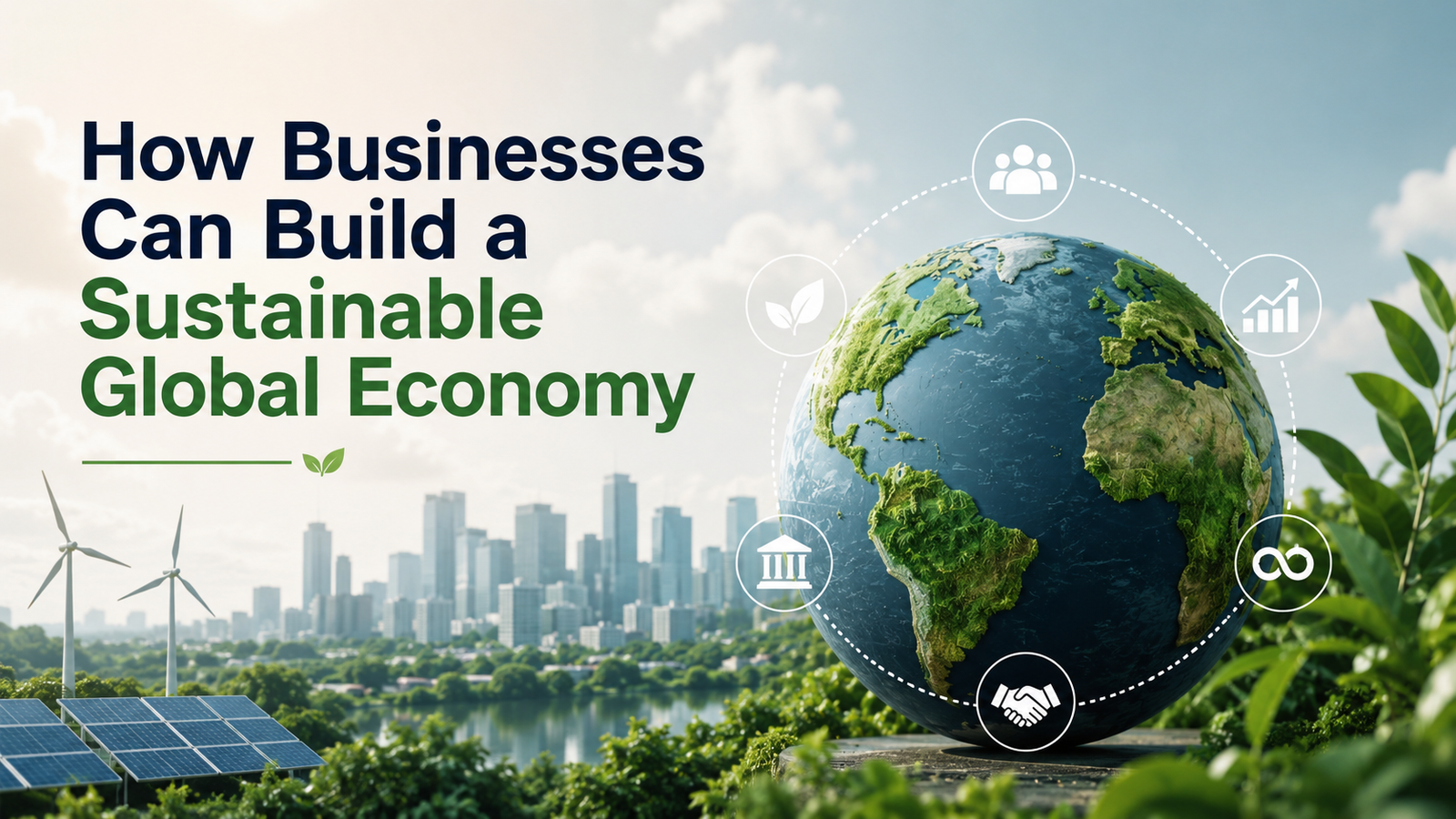
How Businesses Can Build a Sustainable Global Economy
Introduction
The concept of a Sustainable Global Economy has become one of the most important priorities for businesses, governments, and consumers worldwide. As environmental challenges, resource limitations, and social responsibilities continue to influence global markets, organizations are being called upon to rethink how they operate and contribute to long-term economic prosperity.
Today, success is no longer measured solely by profit margins. Businesses are increasingly expected to balance economic growth with environmental stewardship and social responsibility. Companies that embrace sustainability are not only helping create a better future but are also strengthening their competitiveness, reputation, and resilience.
Whether through sustainable sourcing, ethical trade, green logistics, renewable energy adoption, or responsible supply chain management, businesses play a critical role in shaping a Sustainable Global Economy.
For organizations involved in international trade, including Maryam Global Trading Private Limited, sustainability presents an opportunity to create value for customers, communities, and future generations while maintaining strong business performance.
This guide explores practical ways businesses can contribute to a Sustainable Global Economy, the benefits of sustainable practices, and strategies for long-term success in an increasingly conscious global marketplace.
What Is a Sustainable Global Economy?
A Sustainable Global Economy refers to an economic system that promotes growth and prosperity while preserving environmental resources, supporting social well-being, and ensuring opportunities for future generations.
Unlike traditional economic models focused primarily on short-term gains, a sustainable economy emphasizes:
- Responsible resource management
- Environmental protection
- Ethical business practices
- Inclusive economic growth
- Long-term value creation
The goal is to achieve economic success without compromising the planet or society.
Why a Sustainable Global Economy Matters
Businesses today operate in a world where sustainability is becoming a key driver of decision-making.
Growing Environmental Concerns
Climate change, pollution, and resource depletion are affecting economies worldwide
Rising Consumer Expectations
Consumers increasingly support brands that demonstrate environmental and social responsibility.
Regulatory Requirements
Governments are implementing stricter environmental and sustainability regulations.
Investor Interest
Many investors now prioritize companies with strong Environmental, Social, and Governance (ESG) practices.
These factors make the transition to a Sustainable Global Economy both a responsibility and a strategic business opportunity.
Health-Conscious Consumer Trends
Modern consumers increasingly prefer:
- Natural foods
- Organic products
- Plant-based proteins
- Functional ingredients
- Clean-label products
Expanding International Trade Networks
Improved logistics, trade agreements, and digital marketplaces are making international trade more accessible than ever before.
Reducing Waste Through Circular Economy Practices
The traditional “take, make, dispose” model is increasingly being replaced by circular economy principles
What Is a Circular Economy?
A circular economy focuses on:
- Reuse
- Recycling
- Repair
- Resource efficiency
Business Benefits
- Reduced waste
- Lower costs
- Improved resource utilization
- Enhanced brand reputation
Organizations embracing circular practices strengthen the foundations of a Sustainable Global Economy
Frequently Asked Questions (FAQs)
What are the best Export Opportunities for Indian Food Products?
Basmati rice, organic foods, pulses, fresh fruits, vegetables, tea, and coffee are among the most profitable export categories.
Why are Indian food products in high demand globally?
Indian products are known for their quality, authenticity, affordability, and diverse product range.
How can exporters increase international sales?
By maintaining quality standards, obtaining certifications, expanding into new markets, and building strong buyer relationships
Why should buyers choose Maryam Global Trading Private Limited?
We provide reliable sourcing, quality assurance, export expertise, and customer-focused international trade solutions
Contact Maryam Global Trading Private Limited
Website: https://themaryam.org/
Phone: +91-7017023370
Email: info@themaryam.org
Address:
3, Royal Nest, Near JMCT College,
Wadala Road, Nashik – 422006,
Maharashtra, India
Learn More
Visit our website and explore our global trading solutions:
Search for Maryam Global Trading Private Limited online to discover our latest services, agricultural trading opportunities, and international business partnerships.