The Future of Global Agricultural Trade in 2026
Introduction
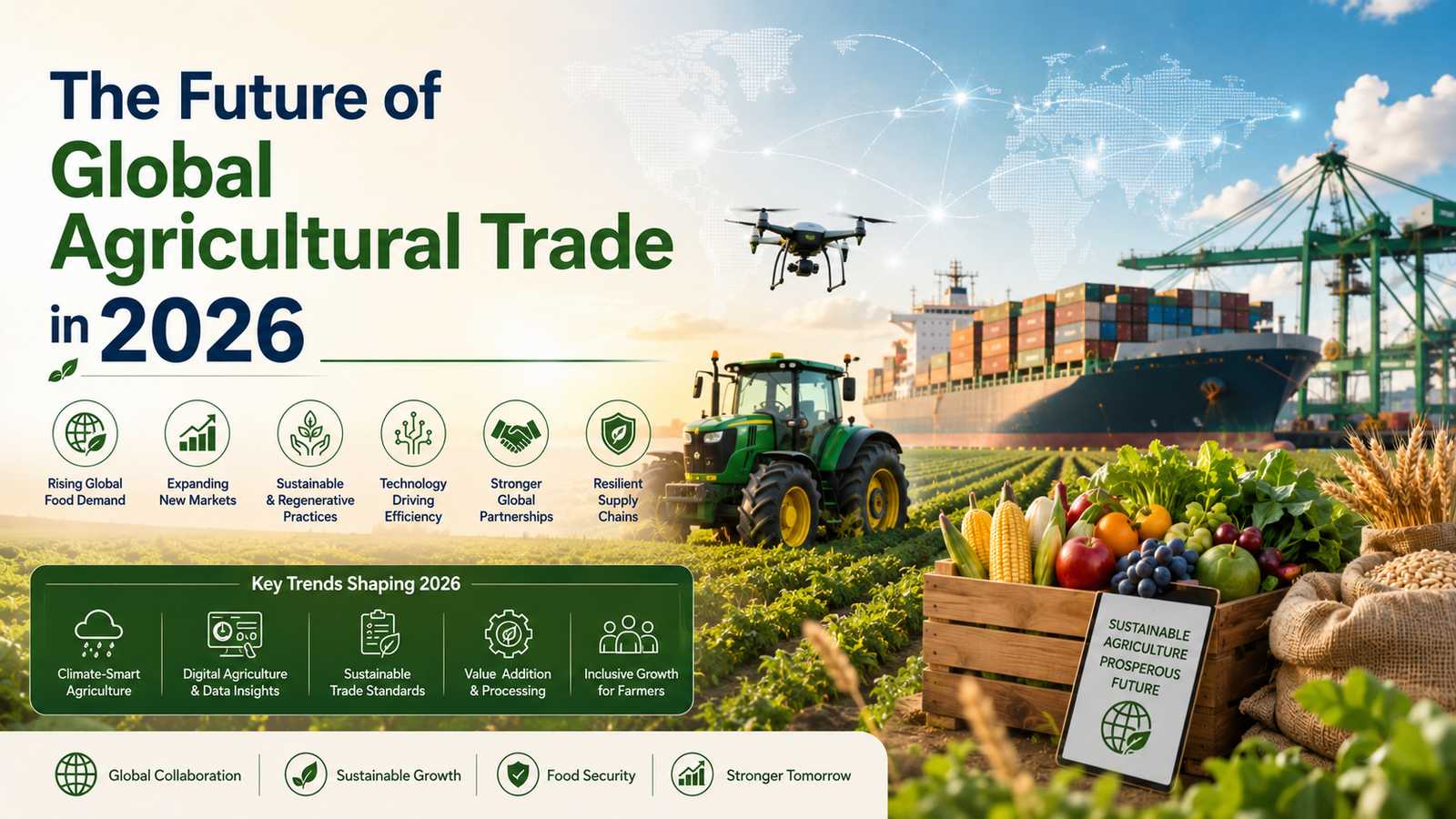
The Future of Global Agricultural Trade is entering a transformative era in 2026. As the world’s population continues to grow, food security, technological innovation, climate change, and evolving trade policies are reshaping how agricultural products move across international markets.
Agricultural trade is no longer just about exporting and importing crops. It now involves advanced supply chains, digital marketplaces, sustainability standards, and strategic partnerships between nations. Businesses, farmers, exporters, and policymakers are adapting to these rapid changes to remain competitive in a dynamic global environment.
In this article, we explore the Future of Global Agricultural Trade, the major trends influencing the sector, emerging opportunities, challenges, and how businesses can position themselves for long-term success
Why Global Agricultural Trade Matters More Than Ever
Agricultural trade plays a critical role in ensuring food availability across countries. Many nations rely on imports to meet domestic food demand, while agricultural exporters contribute significantly to economic growth and employment.
Key benefits of global agricultural trade include:
- Improved food security
- Access to diverse agricultural products
- Economic growth and foreign exchange earnings
- Technology and knowledge transfer
- Better market opportunities for farmers
As international demand rises, the Future of Global Agricultural Trade will become increasingly important for global economic stability.
Major Trends Shaping the Future of Global Agricultural Trade
1. Digital Transformation in Agriculture
Technology is revolutionizing agricultural production and trade.
Key Innovations Include:
- Artificial Intelligence (AI) for crop management
- Blockchain for supply chain transparency
- Smart farming technologies
- IoT-enabled agricultural equipment
- Digital trading platforms
These innovations help reduce inefficiencies, improve product traceability, and facilitate faster international transactions.
As digital adoption increases, exporters and importers can connect directly through online marketplaces, reducing costs and increasing market access.
2. Sustainability Becomes a Trade Requirement
Sustainability is no longer optional.
Governments, consumers, and international organizations are demanding environmentally responsible agricultural practices.
Sustainability Drivers:
- Reduced carbon emissions
- Water conservation
- Organic farming practices
- Sustainable packaging
- Ethical sourcing standards
Countries that adopt sustainable farming methods will gain a competitive advantage in global markets.
The Future of Global Agricultural Trade will increasingly favor suppliers who can demonstrate compliance with environmental and social standards.
Emerging Markets Driving Agricultural Growth
Asia's Growing Demand
Asia continues to experience rapid population growth and urbanization.
This trend is increasing demand for:
- Grains
- Pulses
- Fruits
- Vegetables
- Processed food products
Countries such as India, Vietnam, Indonesia, and Bangladesh are expected to remain major agricultural trade hubs.
Africa's Agricultural Potential
Africa possesses vast agricultural resources and significant untapped potential.
Investments in:
- Infrastructure
- Logistics
- Irrigation
- Agricultural technology
are expected to boost agricultural exports significantly over the coming years.
Middle East Food Security Initiatives
Many Middle Eastern countries rely heavily on agricultural imports.
As food security becomes a national priority, trade partnerships with reliable exporters will continue to expand
Opportunities for Agricultural Exporters in 2026
The Future of Global Agricultural Trade presents significant growth opportunities.
High-Potential Export Categories
1. Organic Agricultural Products
Demand for organic food continues to rise worldwide.
2. Processed Food Products
Value-added agricultural products often generate higher profit margins than raw commodities
3. Specialty Crops
Premium products such as spices, herbs, and specialty fruits are gaining popularity globally.
4. Sustainable Agricultural Goods
Products with sustainability certifications attract environmentally conscious buyers.
The Future Outlook for Global Agricultural Trade
Looking ahead, global agricultural trade is expected to become:
- More technology-driven
- More sustainable
- More transparent
- More interconnected
- More resilient
Businesses that embrace innovation and adapt to changing market demands will be best positioned for growth.
The Future of Global Agricultural Trade is not simply about moving products across borders. It is about creating smarter, more sustainable, and more efficient global food systems that benefit producers, consumers, and economies worldwide.
Frequently Asked Questions (FAQs)
1. What is the Future of Global Agricultural Trade in 2026?
The future is expected to be driven by technology, sustainability initiatives, climate adaptation strategies, and expanding global market opportunities
2. How does technology impact agricultural trade?
Technology improves supply chain transparency, operational efficiency, market forecasting, and international trade connectivity.
3. Why is sustainability important in agricultural trade?
Consumers and governments increasingly demand environmentally responsible farming practices and sustainable sourcing.
4. What opportunities exist for agricultural exporters?
Organic products, processed foods, specialty crops, and sustainably certified agricultural goods offer strong growth potential.
Conclusion
The Future of Global Agricultural Trade in 2026 presents exciting opportunities for businesses willing to innovate, adapt, and invest in sustainable growth strategies. Technology, evolving consumer preferences, climate resilience, and international cooperation will shape the next chapter of global agricultural commerce.
Organizations that embrace these changes today will be better positioned to thrive in tomorrow’s competitive marketplace.
If you are looking for reliable agricultural trading solutions, strategic sourcing, international partnerships, and global market opportunities, partnering with experienced professionals can help accelerate your success in the evolving agricultural trade landscape.
Contact Maryam Global Trading Private Limited
Website: https://themaryam.org/
Phone: +91-7017023370
Email: info@themaryam.org
Address:
3, Royal Nest, Near JMCT College,
Wadala Road, Nashik – 422006,
Maharashtra, India
Learn More
Visit our website and explore our global trading solutions:
Search for Maryam Global Trading Private Limited online to discover our latest services, agricultural trading opportunities, and international business partnerships.